 By
By
Lamborghini Urus: The Super SUV That Broke the Mold
A New Era for Lamborghini
Before the Urus, Lamborghini was known first and foremost for V12 and V10 supercars — flashy, high-revving, low-slung beasts built for speed and excitement. But in December 2017, Lamborghini unveiled something different. The Urus marked their entry into the luxury SUV / crossover market, combining supercar performance with more utility. Lamborghini.com+2Lamborghini.com+2
It didn’t just fill a niche — it opened up a whole new segment for the brand. Quickly, it became one of their best-selling models. By its fourth anniversary (2021), it was already clear: the Urus was changing Lamborghini’s customer base and expanding the brand’s reach. Lamborghini.com+1

Key Specs & Performance
Here are some of the defining numbers (especially for the “gas only” versions and the newer hybrid model):
| Specification | “Traditional” Urus (V8, non-hybrid) | Urus SE (Plug-In Hybrid) |
|---|---|---|
| Engine | 4.0-liter twin-turbo V8 autoevolution+3Lamborghini.com+3Wikipedia+3 | Same V8 + electric motor Car Origins+2Wikipedia+2 |
| Power / Torque | ~ 650 CV (~478 kW), 850 Nm of torque encyCARpedia+3Lamborghini.com+3autoevolution+3 | Combined output ~ 800 CV, with substantial torque boost via the electric motor Car Origins+1 |
| 0-100 km/h (0-62 mph) | Around 3.6 seconds (gas version) Lamborghini.com+2autoevolution+2 | Slightly quicker / similar in aggressive trims, depending on model details Car Origins |
| Top Speed | ~ 305 km/h (≈ 190 mph) Lamborghini.com+1 | Similar high top speeds, though the SE may be slightly adjusted due to hybrid components Car Origins |
| Size & Weight | Length ~ 5,113 mm, width ~ 2,017 mm, height ~ 1,638 mm, weight ~ 2,200 kg Wikipedia+1 | Heavier with the hybrid components & battery but retains much of the framework. Wikipedia+1 |
Design & Usability
-
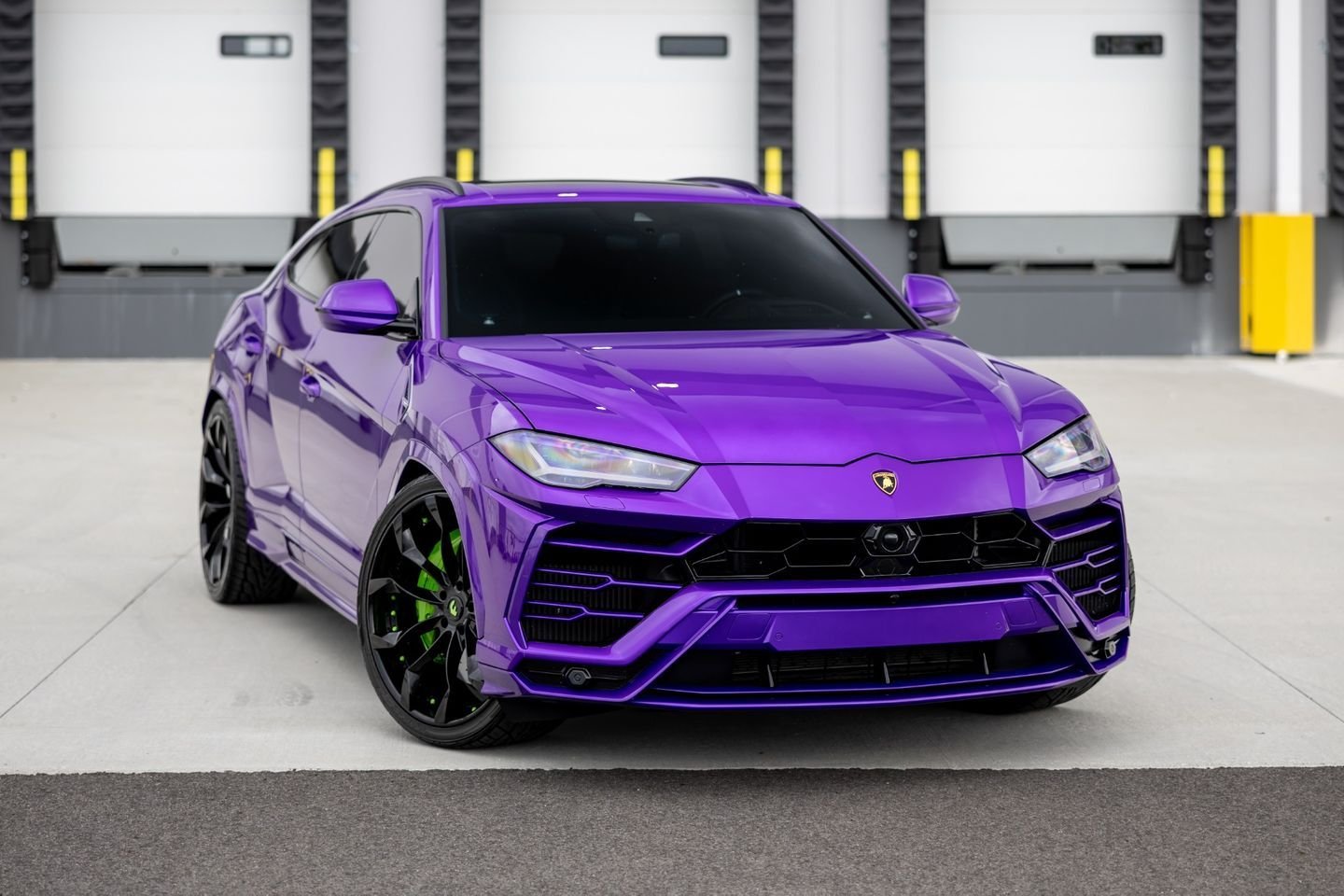
Exterior Styling: Muscular surfaces, aggressive lines, the signature Lamborghini details (Y-shaped/hexagonal motifs, sharp angles, strong shoulders). It blends “supercar styling” into an SUV silhouette. Lamborghini.com+1
-
Interior: High quality materials (leather / Alcantara / carbon fiber / aluminum etc.), driver-oriented cockpit, multiple displays, strong tech features and customization options. Lamborghini.com+1
-
Driving Modes & Dynamics: The Urus offers varied driving modes (e.g. Strada, Sport, Corsa, and off-road modes like Terra, Sabbia, Neve) to adapt to different terrains. Also features like all-wheel drive, torque vectoring, adaptive suspension, four-wheel steering in some trims, etc. Lamborghini.com+2Wikipedia+2
The Hybrid Shift: Urus SE
One of the most important recent evolutions is the plug-in hybrid Urus SE. This isn’t just about adding electrification — it represents Lamborghini adapting to shifting regulatory landscapes, emissions expectations, and customer demands. Some of its highlights:
-
Combined outputs that push past previous non-hybrid versions. Car Origins+1
-
Electric driving capability for lower-speed use (useful in cities or for short commuting). Car Origins
-
The challenge will be balancing the added weight and complexity of hybrid systems with the performance and “feel” that Lambo owners expect.
Why it Matters
-
Sales & Brand Reach: The Urus has become a major revenue and volume contributor for Lamborghini. It attracts buyers who want exotic performance but need more day-to-day usability than a two-seat supercar offers. Lamborghini.com+1
-
Technology Transfer: Many of the technologies (suspension, AWD torque vectoring, hybridization) are now standard or becoming standard in high performance vehicles; Urus is a testbed for pushing boundaries in those areas.
-
Changing Perceptions: Before SUVs, many thought exotic brands would suffer losing exclusivity. Urus shows you can retain strong performance, brand prestige, and yet broaden appeal.
Things to Consider / Potential Drawbacks
-
Fuel Economy & Emissions: Even with hybrid options, when pushed hard the Urus is thirsty. If you’re mostly city-driving, the benefits of the SE might be less dramatic depending on usage.
-
Cost: Purchase price is very high, and options/customization drive it even higher. Maintenance, insurance, fuel, etc., are also costly.
-
Weight & Handling Limitations: Because it’s an SUV, it has more mass than typical Lamborghinis, so some aspects of agility are compromised vs. pure supercars. The hybrids also add weight.
-
Visibility / Practicality: While more practical than a two-seat supercar, an Urus still isn’t like a room-big luxury SUV; cargo space, rear-seat comfort, etc., are good but have limits.
Where It’s Headed
Looking forward:
-
The hybridization trend will deepen; future models will likely push more electric range, better efficiency.
-
Possibly even more trims or variants (lighter weight, more track-focussed, or more off-road oriented) as Lamborghini experiments with what the “Super SUV” category can do.
-
Further improvements in materials to offset the weight of hybrid systems (lighter composites, etc.).
Conclusion
The Lamborghini Urus is an example of an automaker expanding its identity without sacrificing its core DNA. It delivers blistering performance, striking design, and a usable daily dose of luxury. For many buyers who want the prestige and thrills of a Lamborghini but also need space, comfort, and versatility, the Urus is probably the most compelling option in the marketplace.
If you like, I can draft a buyer’s guide: what to check if you’re buying one pre-owned, what trims are best, etc. Do you want that?